

Backend and System Architecture
Backend and System Architecture
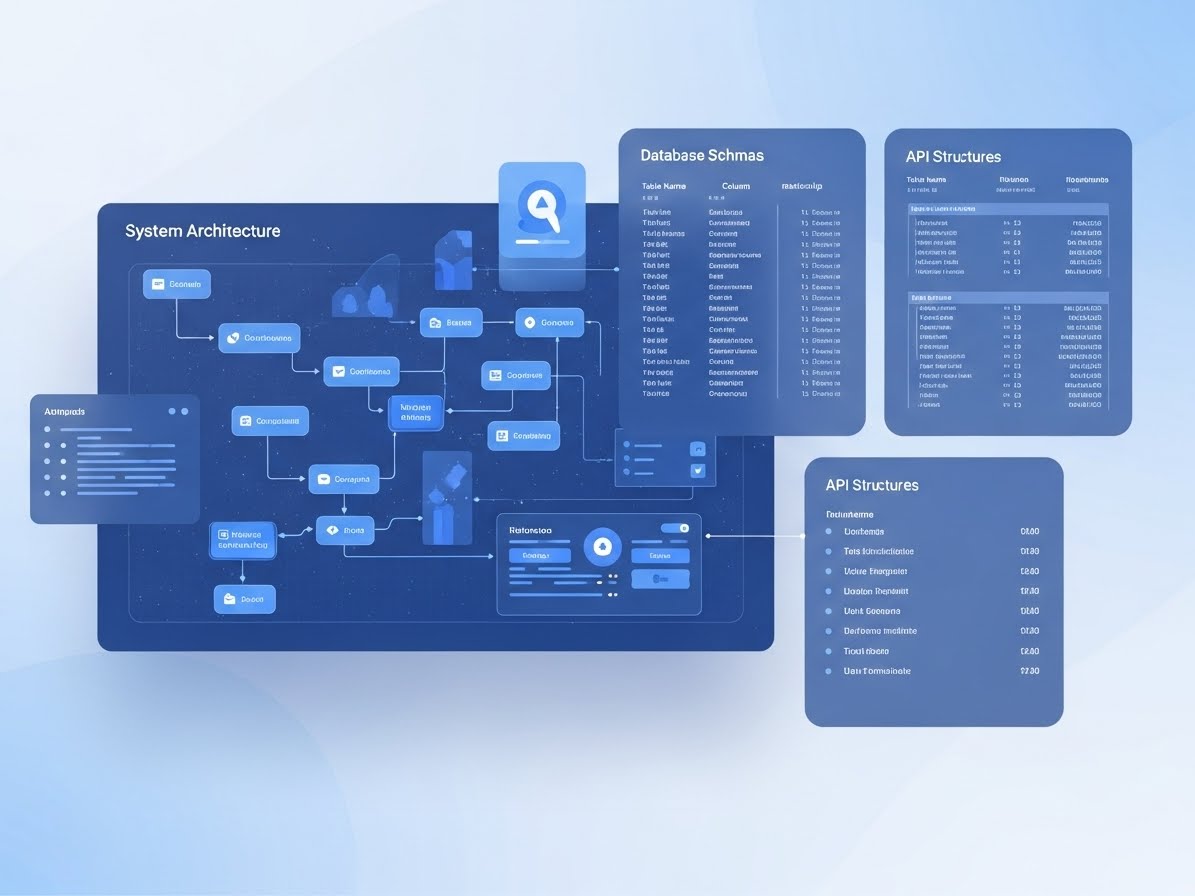
I build database management, system architecture and backend solutions. I take care to design scalable, secure infrastructure up front, so it can carry the growth of the business.
Who this is for
This is for businesses whose systems slow down as users grow, whose databases have become scattered, or who need to integrate with outside systems. I first understand the current state, then propose a gradual path that avoids unnecessary rewrites.
What I do
- API and service-layer design
- Database modeling, management and performance work
- Caching and session management
- Integration with existing systems and data migration
Main technologies: Node.js, ASP, MongoDB, Redis, T-SQL, JSON Server and Firebase.
How I manage work in this area
Architecture decisions are the most expensive ones to change later, so I write major decisions down with their reasoning and alternatives.
Steps
- Needs and load assumptions: user counts, data volume and growth expectations are recorded as explicit assumptions.
- Architecture draft and decision log: options, the chosen path and the reason are kept in short decision records.
- Implementation: services and the data layer go live in small, tested pieces.
- Migration and rollback plan: the steps for moving off the current system and the way back are written in advance.
- Monitoring and handover: performance targets are measured and handed to the team with documentation.
Deliverables
- Architecture draft and decision records
- Data model and API definition
- Migration and rollback plan
- Performance targets and handover document
Methods and tools
Performance and scalability targets are written as acceptance criteria. Changes are made in small, recorded steps, and risks are tracked with owners. Architecture decision records and the data model are kept under version control, so the way the structure changed over time stays traceable and a new team member can get up to speed quickly.
Common risks and how I handle them
- Load assumptions turning out wrong: Assumptions are kept in writing and regularly compared with measurements.
- Data loss during migration: Migration and rollback plans are tested before go-live.
- Dependence on a single person: Decisions and structure are documented and a handover session is held.
Acceptance criteria
- Performance and concurrent-user targets have been verified by measurement.
- The API definition is current and accessible to the team.
- Backup, restore and failure scenarios have been exercised.
- Architecture decisions are documented with their reasoning.
What I will ask you before we start
- What are the expected user counts, data volume and growth?
- What are the current system, database and integrations?
- Are there continuity or data-location requirements?
- Which technologies does the current team know?
Communication rhythm
Major decisions are taken through a written decision record; the weekly status note lists risks and open questions.
Why it matters for leading AI teams
The reliability of AI systems often depends on the data and service architecture underneath: data pipelines, authorization and caching decisions matter as much as the model itself. Knowing this layer helps me set realistic schedules in AI programs.
Frequently asked
Do we need to rewrite the existing system?
Usually not; I run a situation analysis first and compare gradual improvement against a rewrite on cost and risk.
Which database?
Options such as MongoDB, Redis or T-SQL are weighed against the need; the choice is recorded with its reasoning.
To get started: describe your goal in two or three sentences via Contact or on WhatsApp (+90 531 679 10 14). For my overall method see Project Management, for my working rhythm How I Work, and for other areas Services. I work remotely, including across time zones — see the FAQ.